
(This was written when I debated a co-worker several years ago, during President Trump’s first term)
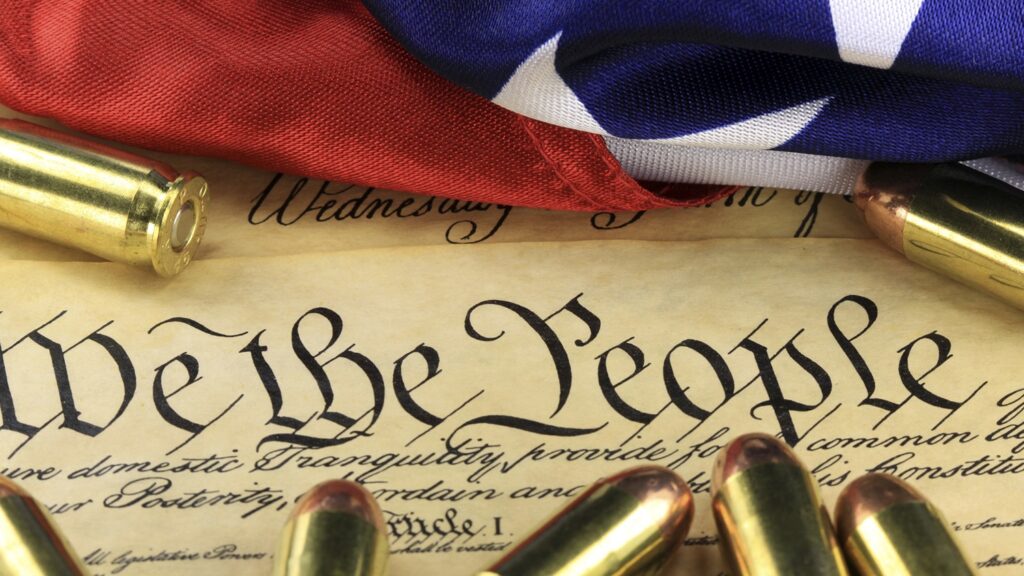
As an American, the Second Amendment holds a special place in my understanding of freedom, not just as a legal concept but as a cornerstone of what it means to live in a self-governing nation. The text is concise yet profound: “A well regulated Militia, being necessary to the security of a free State, the right of the people to keep and bear Arms, shall not be infringed.” To me, this amendment has two distinct but interconnected parts—each addressing a vital aspect of preserving liberty. One speaks to the practical need for a militia to defend against external and internal threats, while the other underscores the deeper principle of ensuring the state remains free from the specter of tyranny, much like the colonists fought for against the British Crown.
Let’s start with the first part: the militia. When I read “a well regulated Militia, being necessary to the security of a free State,” I see a pragmatic acknowledgment of the dangers any society faces. In the late 18th century, standing armies were often viewed with suspicion, and for good reason—they could be tools of oppression. A militia, composed of ordinary citizens, was a decentralized way to ensure security without relying on a potentially overreaching federal force. I think of it as a community-based defense mechanism, ready to respond to foreign invasion, quell insurrections, or even assist in law enforcement when circumstances demand it. Today, we might picture the National Guard as a modern equivalent, but the broader concept still resonates: citizens, armed and trained, can protect their homes and homeland when called upon. To me, this part of the amendment is about preparedness and collective responsibility, ensuring we’re never left defenseless against chaos or external aggression.
But the second part—“the right of the people to keep and bear Arms, shall not be infringed”—carries an even weightier implication. It’s not just about defense against invaders or lawbreakers; it’s about safeguarding the very idea of a “free State.” When I reflect on this, I’m drawn to the historical context of the American Revolution. The colonists took up arms against a distant, unaccountable government that imposed its will without regard for their rights. The Declaration of Independence wasn’t just a breakup letter; it was a bold assertion that people have the right to resist tyranny. To me, the Second Amendment codifies that principle. It’s a reminder that the state—meaning the people and their local governments—must have the means to stand against a federal government that oversteps its bounds. The right to bear arms isn’t just about hunting or personal protection; it’s a final check against the kind of centralized power that could erode the freedoms we hold dear.
I’ll admit, this perspective isn’t without its tensions. The idea of an armed populace resisting a modern government can feel abstract, even unsettling, in an era of advanced technology and complex governance. And I’m not blind to the challenges of balancing this right with public safety in a world where firearms can cause devastating harm. But when I weigh those concerns against the amendment’s purpose, I keep coming back to its dual role: empowering citizens to defend their communities and ensuring they’re never disarmed in the face of potential tyranny. The militia clause and the free state principle aren’t separate—they’re two sides of the same coin, both rooted in the belief that liberty requires vigilance.
For me, the Second Amendment is a call to responsibility as much as it is a guarantee of rights. It asks us to be ready to protect our neighbors and our nation, whether from external threats or internal overreach. It’s a reminder of the courage it took to found this country and the resolve needed to keep it free. When I think about the men who signed the Declaration, risking everything to defy a king, I see the Second Amendment as their insurance policy for the future—a way to ensure that the spirit of 1776 lives on, no matter what challenges lie ahead.