

The $8.4 Billion Medi-Cal Misstep: Prioritizing Illegal Immigrants Over America’s Citizens.
California’s decision to allocate $8.4 billion of its general fund to provide Medi-Cal benefits for illegal immigrants is a fiscal and moral miscalculation that diverts critical resources from the nation’s most vulnerable citizens. This expenditure, part of a broader $9.5 billion program, has sparked heated debate, with proponents claiming it’s justified because illegal immigrants pay taxes. However, a closer examination reveals flaws in this argument and exposes the profound opportunity cost of this policy—resources that could transform the lives of homeless veterans and other struggling Americans are instead being funneled to those who entered the country illegally.
The “They Pay Taxes” Fallacy
Advocates for expanding Medi-Cal to illegal immigrants often argue that these individuals contribute to the economy through taxes, citing a 2022 estimate from the California Budget Center that undocumented residents paid $8.5 billion in taxes. This figure, however, obscures a critical reality: illegal immigrants, by definition, cannot legally obtain a Social Security Number (SSN) unless they fall under specific categories like Deferred Action for Childhood Arrivals (DACA). Without an SSN, they are barred from participating in federal payroll tax systems like Social Security and Medicare, which form a significant portion of tax revenue. Instead, their contributions are largely limited to sales taxes, property taxes (often indirectly through rent), and, in some cases, state income taxes filed under Individual Taxpayer Identification Numbers (ITINs).Even accepting the $8.5 billion figure, it doesn’t offset the cost of Medi-Cal alone, which at $9.5 billion exceeds their tax contributions by $1 billion before factoring in other public services like education, policing, or infrastructure. Moreover, the tax argument ignores the broader economic strain: illegal immigrants often work in low-wage, cash-based jobs, limiting their taxable income, and their reliance on public services creates a net fiscal burden. The notion that their tax contributions justify free healthcare overlooks the reality that legal residents and citizens, who pay into the full spectrum of federal and state taxes, are competing for the same strained resources.
Taking Away from Citizens
California’s Medi-Cal expansion prioritizes illegal immigrants over citizens who rely on the program, exacerbating an already dire access crisis. With one in four Californians enrolled in Medi-Cal, the addition of an estimated 700,000 illegal immigrants has overwhelmed the system, leading to longer wait times and reduced provider availability for vulnerable populations like impoverished children, the disabled, and elderly citizens. The California Senate Republican Caucus warned in 2022 that this influx would “exacerbate current provider access problems,” a prediction borne out by reports of emergency room wait times averaging four hours and 34 minutes—nearly two hours above the national average.This redirection of resources is not just a logistical failure; it’s a betrayal of America’s social contract. Citizens who have paid taxes for decades, including veterans who served the nation, are being sidelined. The state’s $68 billion budget deficit in 2024 underscores the recklessness of this policy—every dollar spent on illegal immigrants is a dollar not invested in schools, infrastructure, or healthcare for legal residents. Assemblyman Carl DeMaio, R-San Diego, pointedly noted that the $9.5 billion spent on illegal immigrant healthcare could eliminate the need to tap the state’s rainy day fund, preserving fiscal stability for citizen-focused programs.
A Better Use: Homes for Homeless Veterans
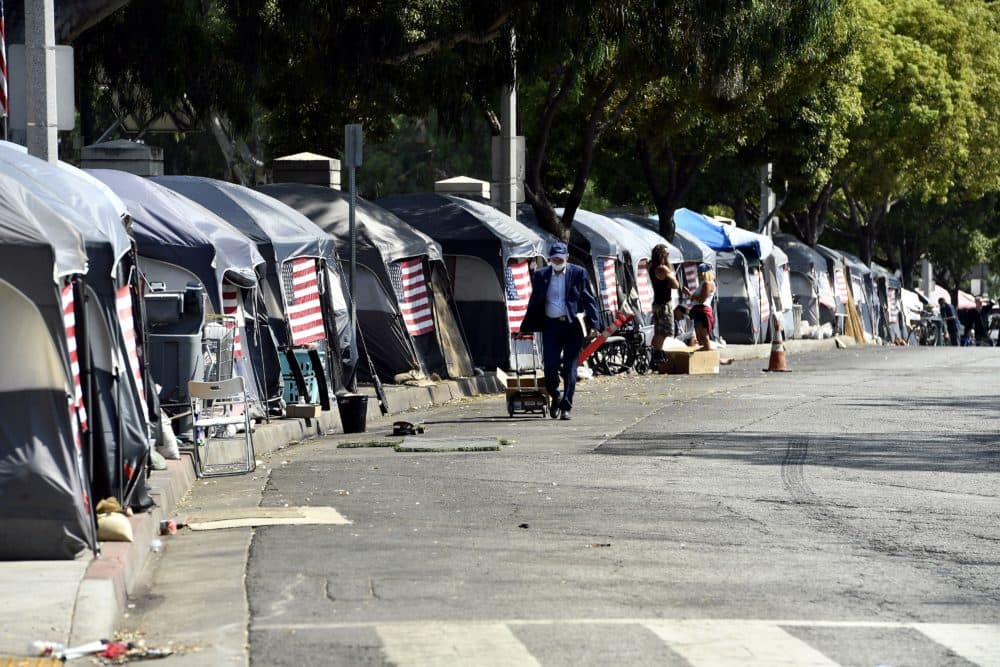
Perhaps the most striking illustration of this misallocation is what $8.4 billion could achieve for America’s homeless veterans. The U.S. Department of Housing and Urban Development estimated in 2023 that the US had over 33,000 homeless veterans, a shameful figure for a nation with such wealth. With $8.4 billion, the state could purchase a modest $250,000 home for each of these veterans, totaling approximately $8.25 billion, with funds left over for supportive services like job training or mental health care. Some argue that mental illness prevents certain veterans from wanting a home, but this overlooks the potential to redirect these funds toward building treatment facilities that address PTSD, addiction, and other mental health challenges, ensuring comprehensive care that stabilizes veterans and prepares them for housing.Such an initiative would not only honor those who sacrificed for the country but also address a visible and solvable crisis. Veterans face unique challenges, including PTSD and physical disabilities, that contribute to homelessness. Providing stable housing and mental health support would reduce strain on shelters, emergency rooms, and law enforcement, yielding long-term savings. In contrast, the Medi-Cal expansion offers no such systemic benefits—it perpetuates a cycle of dependency while straining an already insolvent program, as evidenced by the state’s need for a $3.4 billion loan to cover Medi-Cal’s shortfall in 2025.
A Question of Priorities
California’s decision to spend $8.4 billion on Medi-Cal for illegal immigrants reflects a troubling set of priorities. The “they pay taxes” argument crumbles under scrutiny, as their contributions fall short of the costs and are limited by their legal status. Meanwhile, the policy deprives citizens—especially vulnerable groups like veterans—of critical resources, deepening inequities in a state already grappling with a homelessness crisis and a budget deficit. Redirecting these funds to provide homes for over 33,000 homeless veterans would be a tangible, transformative investment in those who have served the nation.As Assemblyman DeMaio warned, continuing this policy risks further cuts to services for legal residents, with federal proposals threatening $11.2 billion in Medicaid reductions if states persist in covering illegal immigrants. California must reconsider its approach, prioritizing fiscal responsibility and the well-being of its citizens over ideological commitments. The $8.4 billion spent on Medi-Cal for illegal immigrants isn’t just a waste—it’s a missed opportunity to uplift those who have earned the nation’s support.
Sources:
- California Department of Finance, cited in The Center Square, 2025
- California Budget Center, 2024
- California Senate Republican Caucus, 2022
- U.S. Department of Housing and Urban Development, 2023
- Assemblyman Carl DeMaio, statements in California Assembly, 2025