
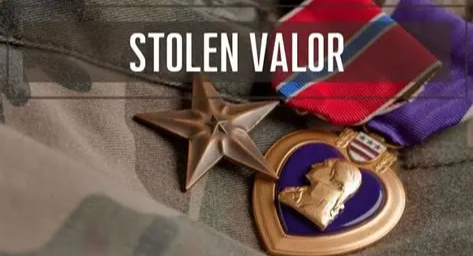
As a proud veteran and the voice behind @RealUSAFVeteran on X, I’ve seen firsthand how social media can amplify both truth and deception. On X, where open dialogue thrives, the issue of “Stolen Valor”—people falsely claiming military service or honors for personal gain—has become a growing problem. That’s why I’m spearheading a movement for a Veteran Verification system on X, a solution that could curb Stolen Valor and protect the integrity of military service. Here’s why I believe a verification process, like a green checkmark for verified veterans, is urgently needed and how it can make a difference.
Why Stolen Valor Hits Close to Home
For me, Stolen Valor isn’t just a crime; it’s a personal affront to every veteran who has sacrificed for this country. The Stolen Valor Act of 2013 makes it illegal to falsely claim military service or awards for tangible benefits like money or jobs, but social media has given impostors a new playground. On X, anyone can pose as a decorated veteran, share fake stories, and gain admiration, sympathy, or even donations from unsuspecting users.
The Department of Veterans Affairs reported over 300 Stolen Valor investigations in 2022, twice as many as five years earlier. Social media fuels this epidemic—fake profiles can go viral overnight. I remember a 2022 TikTok case where a user posing as a wounded veteran racked up millions of likes until real veterans, like me, spotted flaws in their story and uniform. These incidents don’t just mislead the public; they erode trust in genuine veterans and cheapen the honors we’ve earned.
My Vision for Veteran Verification
I’m advocating for X to implement a Veteran Verification system, partnering with services like ID.me or the VA to authenticate users who’ve served. Once verified, veterans would receive a green checkmark, a clear sign of authenticity. With support from users like @jopawo, @SteveLovesAmmo and @Christine_2030, this idea is gaining traction. Here’s why I’m so passionate about it:
1. Building Trust: A verified badge would let users know who’s the real deal. In a space where anyone can claim to be a veteran, this marker would give me and others peace of mind, ensuring our stories are heard without suspicion. @Nerds4Liberty hit the nail on the head: partnering with ID.me could make verification secure and fraud-proof.
2. Stopping Impostors in Their Tracks* A visible verification system would scare off fakes. If impostors know their lack of a badge will raise red flags, they’ll think twice before lying about service. This aligns with groups like the American Legion, which I support, that urge reporting fraud.
3. Protecting Our Community: Veterans are prime targets for scams. The Federal Trade Commission says we lost $419 million to fraud in 2024. Stolen Valor often ties into these schemes, with impostors exploiting military goodwill to con people. A verification system would help users spot real veterans, keeping our community safer.
4. Honoring What We’ve Earned: Awards like the Purple Heart or Medal of Honor mean everything to those who’ve earned them. When fakes claim these honors, it’s a slap in the face. I want a system that ensures only those who’ve served can claim their rightful recognition. As @af_flyboy put it, this would “validate all veterans and active duty members while cleaning up the rampant stolen valor issues on this platform.”
How We Can Make It Happen
I believe Veteran Verification is doable. Services like ID.me, used by the VA and hundreds of retailers, already verify veterans securely. X could adopt a similar process, asking for proof of service like a DD-214 or VA records through a trusted third party. Once verified, we’d get a green checkmark to show our authenticity.
Privacy is a concern I take seriously. The system could limit data sharing to just confirm service, keeping personal details safe. The National Personnel Records Center and VA databases are reliable sources to ensure accuracy while following privacy laws.
Facing the Critics
Some might say verification limits free speech or is too complicated. But the Stolen Valor Act of 2013 already clarifies that fraudulent claims for benefits aren’t protected speech. My proposal is voluntary—it won’t stop anyone from sharing stories but will help users separate fact from fiction. And with ID.me’s proven track record, complexity isn’t an issue; scalable verification is already here.
Others might worry about veterans without documentation or potential misuse. I’ve thought about that too. X could work with groups like the American Legion or Veterans of Foreign Wars, experts at validating service, to create alternative pathways for verification.
My Call to You
I’m leading this charge, but I need your help. Users like @rainman67ko are already rallying behind me, urging X’s leadership to act. A Veteran Verification system would protect our community and make X a beacon of authenticity. It would show the world that this platform honors those who’ve served. We veterans have earned the right to be recognized without impostors stealing our valor. A green checkmark might seem small, but to me, it’s a symbol of truth and respect. Join me in making X a platform that stands against Stolen Valor. Get Involved: Share this article, tag @elonmusk, and use hashtags like #VeteranVerification and #StopStolenValor. Follow me, @RealUSAFVeteran, for updates on this mission. Together, we can honor those who’ve served. 🫡
Sources:
- Stolen Valor Act of 2013 and its implications –
- Rise of Stolen Valor cases online –
- Veteran fraud statistics –
- ID.me and verification processes –
- Veteran organizations and fraud reporting –
- X user posts advocating for verification